

In the Gaza Strip, access to a nutritious and regular meal can no longer be taken for granted. For many families, the consequences of war, repeated displacement, damaged livelihoods, disrupted markets, and limited access to cooking facilities have transformed food into a daily challenge. In response to these growing needs, Hira Association for Community Development is launching Ehsan, a hot meal distribution program designed to support displaced people across the Gaza Strip and help ease one of the most immediate burdens facing families today.
Ehsan is built around a simple but essential principle: when families are struggling to secure food, a hot and ready-to-eat meal can provide immediate relief while preserving dignity and responding directly to their circumstances.
Food Security in Gaza: A Crisis Beyond Access to Food
War and the Growing Food Security Crisis
The war has profoundly affected the ability of families across the Gaza Strip to access food consistently and adequately. The destruction of livelihoods, disruption of markets and supply chains, repeated displacement, restricted access to agricultural land, and limited purchasing power have all increased household vulnerability to hunger and acute food insecurity.
According to the latest Integrated Food Security Phase Classification (IPC) analysis, more than 1.2 million people, or 59% of Gaza’s population, faced Crisis or worse levels of acute food insecurity between mid-April and the end of June 2026. This included approximately 212,000 people experiencing Emergency conditions.
The situation remains highly fragile. The IPC projects that more than 1.4 million people, representing 67% of the population, could face Crisis or worse levels of acute food insecurity between July and December 2026. These figures demonstrate that although humanitarian assistance has contributed to measurable improvements in some food security and nutrition indicators, the underlying needs remain extremely high.
For displaced families in particular, food insecurity is closely connected to the wider conditions in which they live. Many families have been displaced multiple times, while damaged homes, limited income opportunities, restricted access to essential goods, and inadequate living conditions continue to affect their ability to meet basic needs.
Food Is More Than Calories
Food insecurity is not only about whether food exists. It is also about whether people can consistently access sufficient, safe, nutritious, and diverse food.
The World Food Programme (WFP) continues to report significant challenges in Gaza related to food access, purchasing power, livelihoods, and dietary diversity. Many families remain dependent on humanitarian assistance, while access to fresh vegetables, fruits, protein, cooking fuel, and other essential items remains difficult.
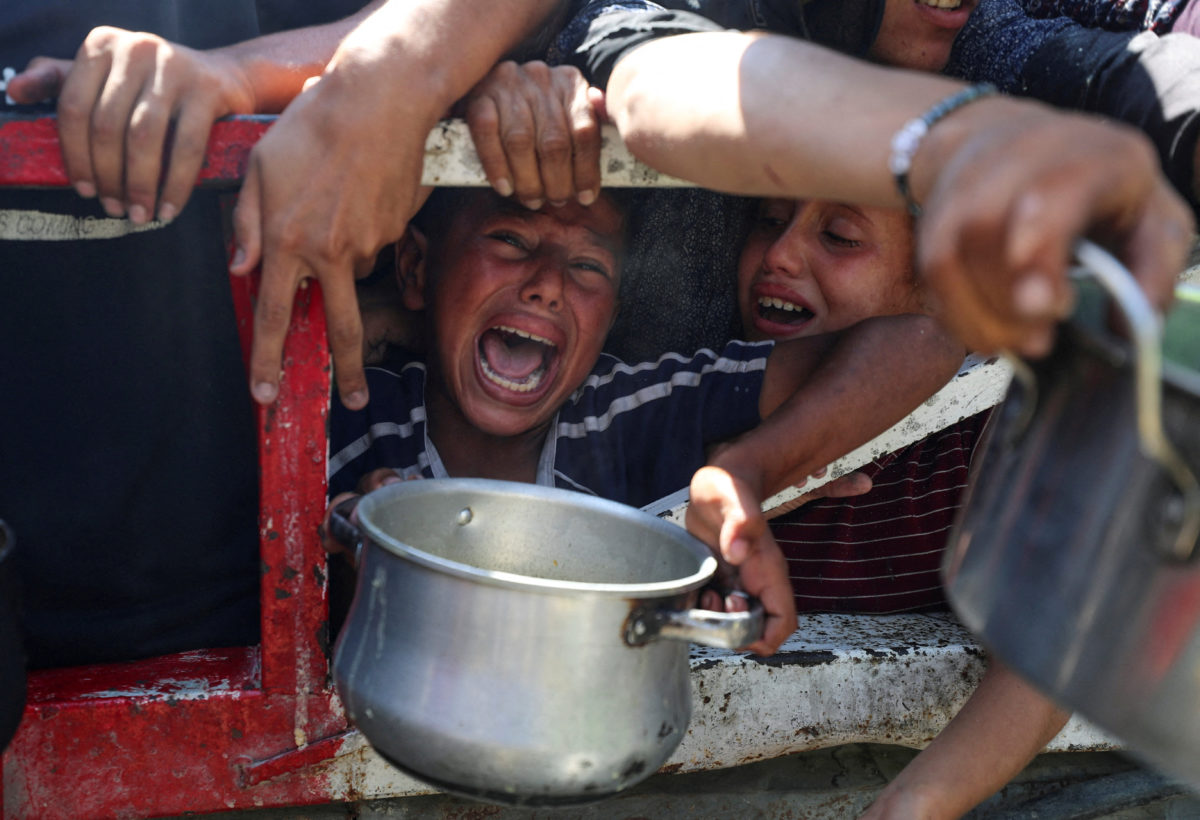
In this context, hot meals can provide an important form of direct humanitarian support. For families living in displacement sites, preparing food can itself become difficult when cooking facilities, fuel, ingredients, electricity, or clean water are unavailable or inaccessible.
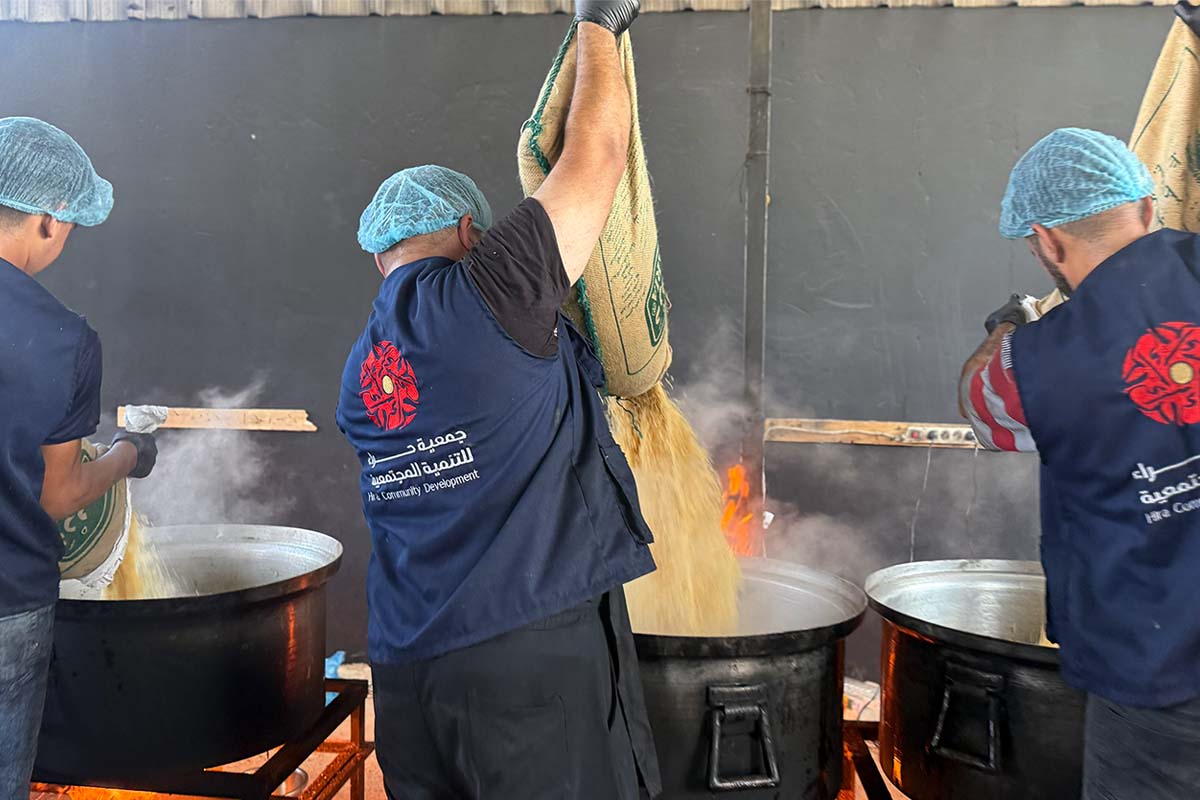
Humanitarian operations in Gaza have demonstrated the importance of community kitchens and prepared meals. The WFP reports that community kitchens continue to provide hundreds of thousands of hot meals every day, particularly for vulnerable families who lack the ingredients or cooking energy required to prepare meals themselves.
It is within this reality that Ehsan is being launched. The program seeks to address an immediate and tangible need: delivering a hot, ready-to-eat meal to displaced people who are facing difficult living conditions and significant barriers to preparing food themselves.
Ehsan: Hira's Response to Displacement and Food Insecurity
Turning Need Into Action
Ehsan is rooted in a fundamental principle of humanitarian work: responding to people's needs where assistance can have a direct and meaningful impact on daily life.
Through the distribution of hot meals, Hira for Community Development aims to help reduce the food burden faced by displaced people and families in need across the Gaza Strip. The program provides ready-to-eat meals at a time when the ability to purchase ingredients, access cooking facilities, or prepare food safely can be a major challenge.
The launch of Ehsan represents an extension of Hira Association's humanitarian efforts in Gaza and its commitment to supporting vulnerable communities through practical interventions that respond to changing needs.
For Hira, humanitarian assistance is not simply about distributing items. It is also about understanding people's circumstances, reaching those who need support, and delivering assistance in a manner that respects their dignity.
Through Ehsan, food becomes the starting point for a broader humanitarian response. Each hot meal represents a direct intervention designed to ease one part of the daily burden experienced by displaced families.
Ehsan: Because Dignity Is Part of Assistance
The name Ehsan reflects more than the act of providing food. It represents an approach to humanitarian assistance in which the way support is delivered matters just as much as what is delivered.
For displaced families living through prolonged hardship, receiving a prepared hot meal can mean more than meeting an immediate nutritional need. It can offer a moment of relief, reduce the pressure of preparing food, and remind families that their needs and dignity matter.
Through the launch of Ehsan, Hira Association for Community Development seeks to make every meal part of a wider humanitarian effort—an effort that responds to immediate needs while remaining attentive to the changing realities of displaced communities across Gaza.
The launch of Ehsan is therefore not simply the beginning of a meal distribution activity. It is the beginning of a continued commitment to stand alongside families facing hardship, to respond where needs are greatest, and to expand humanitarian assistance as resources and circumstances allow.
As food insecurity continues to affect a large proportion of Gaza's population, sustained humanitarian action remains essential. Ehsan seeks to contribute to that response through a simple, direct, and human-centered intervention: a hot meal reaching someone who needs it.